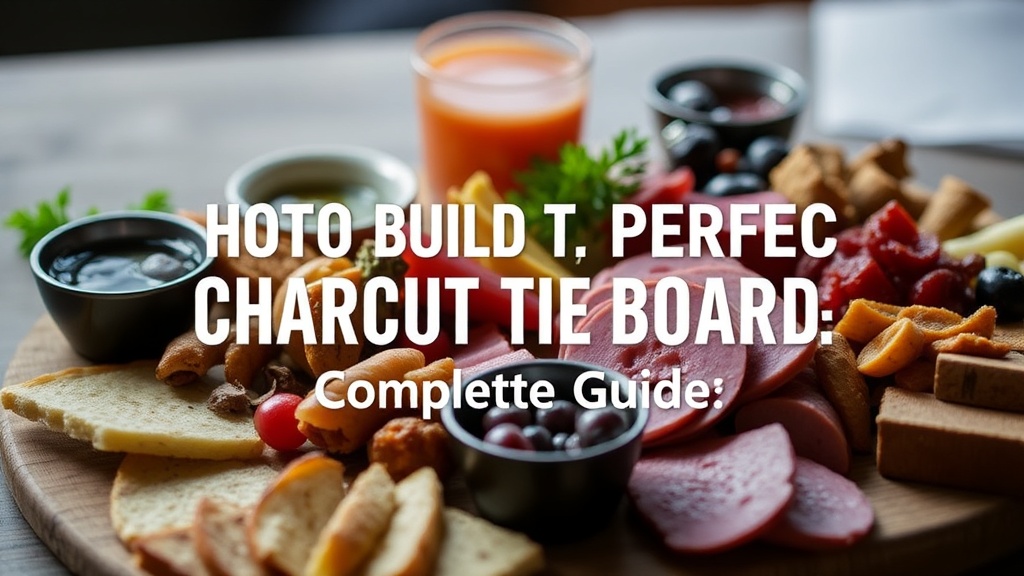
How to Build the Perfect Charcuterie Board: A Complete Guide

This guide covers everything needed to assemble a charcuterie board that actually impresses guests—not just looks good in photos. You'll learn which meats and cheeses work together, how much to buy per person, what accompaniments are worth the money, and the assembly techniques that separate amateur boards from memorable ones. Whether you're hosting six people or twenty, planning a casual Friday night or a holiday gathering, these principles scale.
What Do You Actually Need for a Charcuterie Board?
The short answer: quality cured meats, 3-4 cheeses with different textures, something crunchy, something briny, and a vehicle for delivery (bread or crackers). But the proportions matter more than the specific ingredients.
Here's the thing—most people overthink cheese selection and underthink everything else. A board drowning in fifteen varieties of fromage with no acidic counterbalance falls flat after three bites. Your palate needs contrast.
Start with the board itself. You don't need marble or slate or anything Instagram-pretty. A simple wooden cutting board works fine. So does a large plate. The food matters more than the surface.
For a party of 8-10 people, aim for:
- 3-4 ounces of meat per person
- 2 ounces of cheese per person
- One small jar each of jam, honey, and mustard
- A handful of olives or cornichons
- Fresh or dried fruit—whatever's in season
- One decent baguette or a box of 34 Degrees crackers
Scale up proportionally for larger crowds. Leftovers aren't a tragedy—they're lunch.
Which Meats Belong on a Charcuterie Board?
Cured meats form the backbone of any serious board. The best selections offer variety in texture and flavor intensity without overwhelming the other components.
Prosciutto di Parma is non-negotiable. It's salty, delicate, and pairs with virtually any cheese. Buy it thinly sliced—paper-thin—so it drapes over the board like fabric. The Volpi brand offers consistent quality at a reasonable price point.
Next, add something with more punch. Soppressata (the dry, spicy Italian salami) brings fat and heat. Genoa salami works if you prefer milder flavors. For something truly distinctive, seek out Spanish chorizo—the cured, paprika-laced kind, not the fresh cooking sausage.
A whole muscle cut like bresaola or coppa rounds out the trio. Bresaola is lean and beefy with a wine-cured tang. Coppa—made from the pig's shoulder—offers ribbons of fat and a more complex, spiced flavor profile than standard salami.
Don't cube the salami into bite-sized chunks. That's lazy board building. Instead, fold pepperoni slices into quarters, create rosettes with prosciutto, or slice soppressata on a bias so the rounds fan out. Texture on the board matters as much as texture in the mouth.
The Meat Selection Breakdown
| Meat | Flavor Profile | Best Cheese Pairing | Price Range (per lb) |
|---|---|---|---|
| Prosciutto di Parma | Salty, delicate, slightly sweet | Fresh mozzarella or burrata | $18-$24 |
| Soppressata | Garlicky, fatty, mild spice | Aged Manchego | $12-$16 |
| Spanish Chorizo | Smoky, paprika-forward, dense | Manchego or Iberico | $14-$20 |
| Bresaola | Lean, wine-cured, mineral | Parmigiano-Reggiano | $22-$28 |
| Duck Rillette | Rich, fatty, spreadable | Cornichons and crusty bread | $16-$22 |
What Cheeses Should You Choose?
Select cheeses from three distinct categories: soft, semi-firm, and aged hard. This ensures textural variety and prevents palate fatigue.
For soft cheese, you can't beat a good brie—Fromager d'Affinois is widely available and reliably creamy. Skip the triple-cream varieties if your board already includes rich meats; the fat stacks up fast. A fresh chèvre (goat cheese) offers acidity that cuts through saltier components.
Semi-firm options include Manchego (the 6-month aged version strikes the right balance), aged Gouda (look for the caramel-colored crystalline bits), or Comté. These provide structure and that satisfying tooth resistance.
Your hard cheese should be something with intensity—Parmigiano-Reggiano (always buy the DOP-stamped wedge, never pre-grated), aged Pecorino Romano, or a sharp cheddar from Cabot Creamery if you're keeping things North American.
Remove cheese from refrigeration 45 minutes before serving. Cold cheese tastes like nothing—literally, the fat molecules tighten and block flavor compounds from reaching your taste buds. Room temperature cheese is transformative.
Worth noting: pre-sliced cheese is a shortcut that sacrifices quality. Those plastic-wrapped squares dry out at the cut edges. Buy wedges and slice them yourself, or leave larger chunks with a cheese knife for guests to portion.
How Much Does a Charcuterie Board Cost?
A well-built board for 8-10 people runs between $60 and $100, depending on ingredient quality and your location. The catch? You can trim costs without sacrificing experience—if you're strategic.
Charcuterie gets expensive when every item is imported and artisanal. That's fine for a dinner party where you want to impress. For casual gatherings, mix high and low. Splurge on one exceptional cheese (maybe a $28/lb wedge of aged Comté) and balance it with a decent $8 domestic cheddar. The contrast actually highlights the premium option.
Buy whole salami sticks instead of pre-sliced packages—you'll pay half the per-pound price. A whole chub of Genoa salami from the deli counter at Costco or Sam's Club costs roughly $6 and yields enough for multiple boards.
Olives from the bulk bin beat jarred options every time. They're fresher, you control the quantity, and you're not paying for packaging. The same applies to nuts—buy raw almonds or walnuts from the baking aisle and toast them yourself with a pinch of salt.
Here's where not to cheap out: honey and bread. The $3 squeeze bear of clover honey tastes one-dimensional. Raw, local honey—even from a farmers' market—adds floral complexity that elevates (no, wait—improves) the entire board. And stale crackers ruin everything. Buy good bread or don't bother.
How Do You Assemble a Charcuterie Board?
Start with the largest items—cheese wedges and any bowls containing wet items like olives or jam. These anchor the composition and create natural boundaries.
Next, add the meat. Drape prosciutto in loose folds rather than tight rolls. Create small piles of folded salami slices. If using a whole muscle cut like bresaola, fan the slices in a semi-circle. The goal is accessibility—guests shouldn't have to wrestle with the food.
Fill gaps with crackers, bread slices, or nuts. The board should look abundant, not sparse. That said, there's a difference between generous and cluttered. Leave some negative space—bare wood or plate—so the eye can rest.
Add fresh elements last. Grapes still on the vine look dramatic. Apple slices (tossed in lemon water to prevent browning) add color. Fresh figs, when in season, signal serious intent. These items bridge the gap between savory and sweet while providing visual pop.
Garnishes are optional. A sprig of rosemary or thyme looks nice but serves no functional purpose. If you're serving immediately, skip it. If the board sits out for hours, the herbs actually help—their oils repel some insects. (Practical, if not pretty.)
Assembly Order Checklist
- Place cheeses—space them evenly, odd numbers look better than even
- Add bowls for wet items (olives, mustards, jams)
- Drape and fold meats around the cheese
- Tuck crackers and bread into gaps
- Scatter nuts and dried fruit
- Add fresh fruit as visual accents
- Include cheese knives, small spoons for spreads, and napkins
What About Dietary Restrictions?
Modern hosting requires options for vegetarians, gluten-free guests, and increasingly, dairy-free attendees. Build a companion board rather than compromising the main one.
A vegetarian board emphasizes cheese and vegetable-based dips. Hummus, baba ganoush, and marinated artichoke hearts work beautifully. Load up on nuts, dried fruit, and vegetable crudités. The Murray's Cheese Shop in New York offers excellent vegetarian board guidance—many of their principles apply regardless of location.
For gluten-free guests, ensure crackers are certified GF (simple vegetable slices work too—cucumber rounds, bell pepper strips). Clearly separate bread from other components to avoid cross-contamination concerns.
Dairy-free boards are trickier but doable. Focus on high-quality olives, marinated vegetables, cured meats (check labels—some salami contains milk powder), nuts, and fresh fruit. The new generation of cashew-based "cheeses" from brands like Miyoko's Creamery have improved dramatically and can stand in for soft cheeses.
How Long Can a Charcuterie Board Sit Out?
Two hours at room temperature—four if it's cool in your space. After that, bacteria multiply rapidly on protein-rich foods. That beautiful board becomes a food safety hazard.
The solution for longer gatherings is replenishment. Keep backup ingredients refrigerated and refresh the board every 90 minutes. This actually looks better anyway—no dried-out meat edges or sweaty cheese.
If you're hosting outdoors in summer,缩短 that window to one hour. Heat accelerates spoilage, and nothing ruins a party faster than a guest getting sick. Use ice packs underneath if necessary, or serve smaller portions more frequently.
Leftover meat and cheese stores well wrapped tightly in the refrigerator. Most cured meats last 5-7 days after opening. Hard cheeses can go weeks. The real perishables are soft cheeses (3-5 days) and any cut fresh fruit (consume within 24 hours).
That said—charcuterie boards rarely produce leftovers. That's part of their genius.