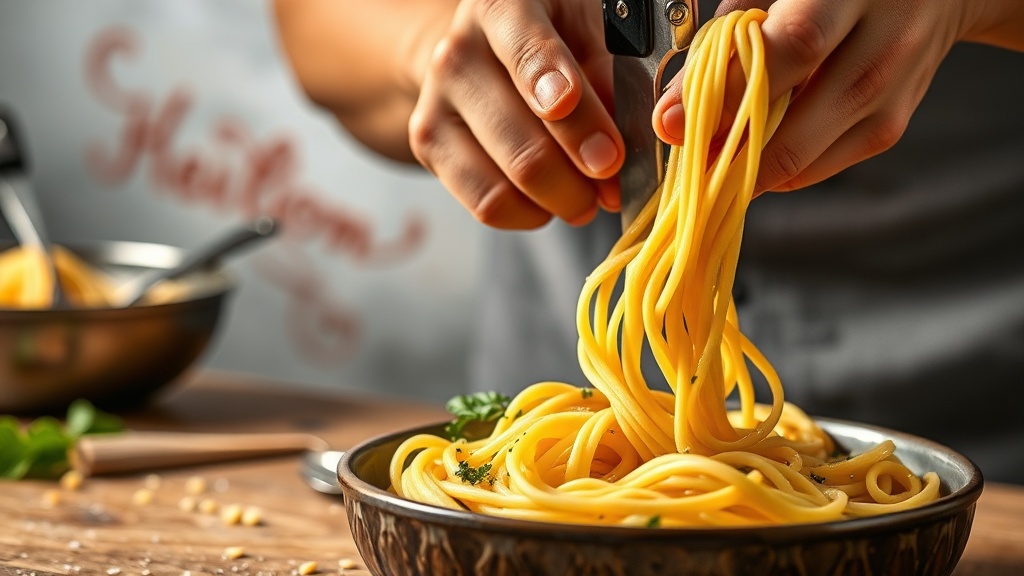
How to Make Perfect Fresh Pasta from Scratch in 60 Minutes

Making fresh pasta at home isn't a weekend project—it takes about an hour from flour to finished noodles. This guide breaks down the process into manageable steps: mixing dough, kneading, resting, rolling, and cutting. You'll get restaurant-quality results without specialty equipment (though a pasta machine helps). The texture beats dried pasta every time, and the ingredient list is shockingly short.
What Equipment Do You Need to Make Fresh Pasta at Home?
You don't need much. A large mixing bowl, a fork, a clean work surface, and a sharp knife will handle the basics. That's it.
Here's the thing: tools make it easier, not better. A pasta machine—the Marcato Atlas 150 is the classic hand-crank model most home cooks swear by—creates uniform sheets with less effort. But a rolling pin and some patience work fine. Many Italian nonnas never touched a machine.
Worth noting: a bench scraper (the OXO Good Grips model runs about $12) saves time when dividing dough and cleaning flour off counters. A wooden pasta drying rack prevents noodles from sticking together, though a clean broom handle suspended between two chairs does the same job.
Skip the gadgets. Pasta stamps, ravioli cutters, gnocchi boards—fun, but not necessary for your first batch. Master the fundamentals before expanding the toolkit.
The Basic Equipment Checklist
- Large mixing bowl or clean counter space for the well method
- Measuring cups and spoons (or a kitchen scale—more accurate)
- Fork or dough whisk for initial mixing
- Bench scraper for cutting and cleanup
- Rolling pin or pasta machine
- Sharp knife or pizza cutter for slicing noodles
- Clean kitchen towels for covering resting dough
- Large pot for boiling (the All-Clad 8-quart stockpot is a solid investment)
How Do You Make Pasta Dough That Actually Works?
Fresh pasta dough needs just flour and eggs—salt and olive oil are optional additions that improve flavor and elasticity.
The standard ratio: 100 grams of flour per large egg. That's it. This scales easily. Two eggs and 200 grams of flour feeds two people generously. Three eggs and 300 grams feeds four.
Semolina flour creates firmer, more toothsome noodles. Serious Eats tested pasta flour extensively and found that 00 flour (finely milled Italian flour) produces silkier results. All-purpose works fine—don't overthink it. Many cooks use a 50/50 blend of all-purpose and semolina for balance.
The method matters more than the flour type. Create a well in the center of your flour mound. Crack eggs into it. Use a fork to gradually incorporate flour from the walls. The catch? Work quickly before the eggs escape. Once shaggy clumps form, ditch the fork and use your hands.
Knead for 8 to 10 minutes. The dough transforms from sticky and rough to smooth and elastic. It should feel like play-dough with more resistance. Under-kneaded dough tears when rolled. Over-kneaded dough becomes tough—hard to do by hand, but possible.
Wrap the dough tightly in plastic wrap. Let it rest at room temperature for 30 minutes minimum. This relaxes the gluten, making the dough pliable enough to roll thin without springing back. Skipping the rest guarantees frustration.
What's the Best Way to Roll and Cut Fresh Pasta?
Divide the rested dough into manageable pieces—walnut-sized for hand-rolling, slightly larger for machines. Keep unused portions covered to prevent drying.
Flatten one piece with your palm. Dust lightly with flour. Roll from the center outward, rotating the dough 90 degrees after each pass. You're aiming for 1/16 inch thick—thin enough to see your hand through it. Paper-thin sheets cook in under two minutes and create that signature silky texture.
With a machine: start at the widest setting. Run the dough through, fold it in thirds like a letter, and run through again. Repeat 3-4 times to laminate and smooth the surface. Then progressively narrow the settings until you reach your desired thickness—usually setting 6 or 7 on a Marcato Atlas.
Cut immediately after rolling. For tagliatelle or fettuccine: dust the sheet lightly, roll it loosely into a cigar shape, and slice crosswise with a sharp knife. Unroll gently. For pappardelle, cut wider—about 3/4 inch. For angel hair, go paper-thin.
Hang cut pasta on a drying rack or arrange in small nests on a floured baking sheet. Don't let pieces touch—they'll weld together.
Pasta Shape Thickness Guide
| Pasta Type | Thickness | Width | Best Flour |
|---|---|---|---|
| Tagliatelle | Setting 6 on Marcato (1-2mm) | 1/4 inch | 00 or 50/50 blend |
| Pappardelle | Setting 5-6 (2mm) | 3/4 inch | Semolina-heavy blend |
| Fettuccine | Setting 6 (1-2mm) | 1/4 inch | All-purpose or 00 |
| Lasagna sheets | Setting 7-8 (1mm) | 3-4 inches | 00 flour |
| Ravioli | Setting 7-8 (1mm) | As needed | 00 flour |
How Long Do You Cook Fresh Pasta?
Fresh pasta cooks in 2 to 4 minutes—sometimes less. It's done when it floats and feels tender but still has bite (that al dente texture).
Bring a large pot of water to a rolling boil—4-6 quarts per pound of pasta. Salt it aggressively. The water should taste like the sea—about 1-2 tablespoons of kosher salt per gallon. This is your only chance to season the pasta itself.
Drop noodles in gently. Stir immediately to prevent sticking. Watch carefully. Fresh pasta goes from perfect to mushy in about 30 seconds. Taste-test constantly after the 90-second mark.
Save a cup of pasta water before draining. That starchy liquid transforms simple sauces into silky coatings that cling to every strand.
That said: don't rinse fresh pasta unless making cold pasta salad. The starch helps sauce adhere. For hot dishes, transfer pasta directly from pot to pan with your sauce—finishing them together creates cohesion no amount of tossing achieves after the fact.
Pairing Sauces with Fresh Pasta
Fresh pasta has different texture than dried—it absorbs sauce differently and has more surface area. Bon Appétit breaks down when to use each effectively.
Delicate egg-based pastas (tagliatelle, fettuccine) pair with light, creamy sauces—think carbonara (guanciale, egg, Pecorino Romano, black pepper) or Alfredo (butter, Parmigiano-Reggiano, pasta water). The sauce should coat, not drown.
Heartier shapes and thicker cuts stand up to meat sauces. A Bolognese (slow-cooked pork and beef ragù from Emilia-Romagna) clings to pappardelle beautifully. Pesto Genovese works best with trofie or trenette—shapes that trap the basil, pine nut, and garlic mixture in crevices.
Oil-based sauces (aglio e olio, cacio e pepe) need starchy pasta water to emulsify into creamy coatings without actual cream. The technique matters more than the ingredients.
Can You Make Pasta Dough Ahead of Time?
Yes—and you should. Wrapped dough keeps in the refrigerator for up to 24 hours. Let it come to room temperature before rolling (about 30 minutes on the counter) or it will fight you.
Cut pasta can be frozen successfully. Arrange noodles in single layers on a baking sheet, freeze until solid (about 1 hour), then transfer to freezer bags. Cook from frozen—no need to thaw—adding an extra minute to cooking time. Lasts up to 2 months.
Dried fresh pasta (hanging until completely hard) stores for weeks, but the texture suffers compared to fresh-frozen. Most home cooks skip this step unless making large batches for convenience.
The real secret? Making pasta is forgiving. Bad batches still taste good. Ragged edges cook fine. Uneven thickness adds character. Samin Nosrat's "Salt, Fat, Acid, Heat" emphasizes that understanding the principles matters more than perfect technique—and pasta proves it.
"The best pasta is the pasta you make. Not the pasta you plan to make next month when you have the right equipment."
Start with two eggs and 200 grams of flour. Mix, knead, rest, roll, cut, boil. Total active time: under 40 minutes. In an hour, you'll eat pasta that rivals anything from a restaurant—made with your hands, in your kitchen, for pennies per serving. The learning curve is one batch long.
Steps
- 1
Mix and Knead the Pasta Dough
- 2
Rest the Dough and Prepare Your Workspace
- 3
Roll, Shape, and Cook Your Fresh Pasta