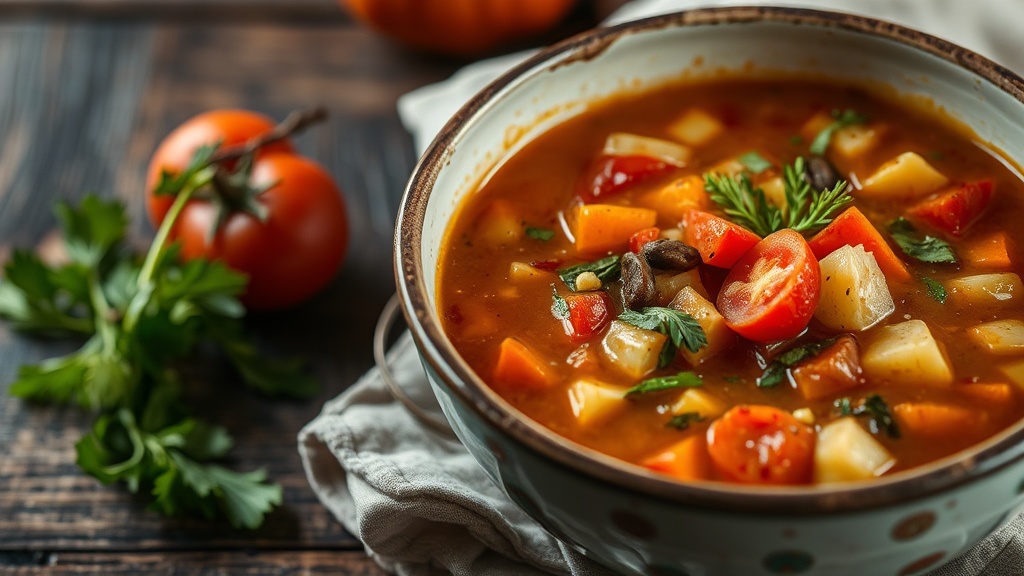
Rustic Farmhouse Vegetable Soup: A Hearty Bowl of Comfort

This post walks through the technique behind rustic farmhouse vegetable soup—an approachable, hearty dish built from simple pantry staples and seasonal produce. Whether you're cooking on a tight budget, feeding a crowd, or simply craving something that sticks to your ribs without weighing you down, this soup delivers. No fancy equipment needed. No culinary degree required. Just a pot, a knife, and about an hour of your time.
What's the Difference Between Farmhouse Soup and Regular Vegetable Soup?
Farmhouse vegetable soup isn't just regular vegetable soup with a fancy name—there's real technique involved. The difference comes down to texture, cooking method, and ingredient philosophy.
Traditional vegetable soup often features uniform, bite-sized pieces in a clear broth. It's lovely. It's polite. But farmhouse soup? It's rustic (hence the name). Vegetables are chopped rough and irregular—some pieces break down completely, thickening the broth naturally, while others retain their shape. The result is a heartier, more substantial bowl.
The cooking method matters too. Farmhouse soups are typically built in layers. Aromatics sweat first. Then hard vegetables join the party. Liquid follows. Everything simmers until the flavors meld into something greater than the sum of its parts. The broth should be rich and slightly thickened—not watery, not pureed smooth, but somewhere satisfying in between.
Here's the thing: farmhouse soup embraces imperfection. A potato chunk that falls apart? That's thickening power. A slightly mushy carrot? That's flavor concentration. This isn't fine dining—it's honest food that fills you up.
Which Vegetables Work Best in Farmhouse Soup?
Almost any vegetable works, but the best farmhouse soups follow a simple formula: aromatics + starchy base + seasonal vegetables + leafy greens at the end.
| Category | Best Choices | When to Add | Why It Matters |
|---|---|---|---|
| Aromatics | Onion, celery, carrot, garlic | First—sweat in oil | Builds the flavor foundation |
| Starchy Base | Potatoes, parsnips, turnips, rutabaga | Second—with broth | Thickens the soup naturally |
| Seasonal Vegetables | Green beans, zucchini, corn, peas, squash | Third—midway through | Adds texture and variety |
| Leafy Greens | Kale, spinach, chard, collards | Last—just before serving | Freshness and color |
Potatoes are the secret weapon here. Russets break down beautifully and thicken the broth. Yukon Golds hold their shape better but still add creaminess. Mix them—nobody's stopping you.
Worth noting: frozen vegetables aren't the enemy. A bag of Birds Eye mixed vegetables works in a pinch. Fresh is wonderful when you have it. Frozen is honest when you don't. The soup won't care.
How Do You Build Flavor Without Meat?
Good farmhouse soup doesn't need ham hocks or bacon to taste rich. The depth comes from technique—specifically, the Maillard reaction and proper seasoning.
Start with a heavy-bottomed pot (a Le Creuset Dutch oven works beautifully, but any sturdy pot will do). Get it hot. Add your fat—olive oil, butter, or a combination. Let your aromatics actually brown at the edges before adding liquid. That browning equals flavor.
The catch? Most home cooks don't let their vegetables cook long enough at this stage. Five minutes isn't enough. Give it ten. Stir occasionally. Watch the color change. Those brown bits stuck to the bottom (called fond, if we're being fancy about it) dissolve into liquid gold once you add broth.
For vegetable broth, Pacific Foods Organic Vegetable Broth offers a solid baseline. Better Than Bouillon Vegetable Base dissolved in water works in a pinch and stores forever in the fridge. Homemade is best when you have it—save your onion peels, carrot tops, and celery leaves in the freezer until you've got enough to simmer into something wonderful.
"The best soups aren't about following recipes exactly—they're about understanding ratios and trusting your senses. Taste as you go. Adjust as needed."
What Herbs and Seasonings Should You Use?
Fresh herbs transform good soup into great soup. Dried herbs work too—they just need time to bloom in the hot liquid.
Here's a reliable approach:
- At the start: Bay leaves, dried thyme, dried rosemary (sparingly—it can overpower)
- During cooking: Salt in layers—some with the aromatics, more after adding broth, final adjustment at the end
- At the finish: Fresh parsley, fresh thyme leaves, a splash of lemon juice or red wine vinegar
That acid at the end—don't skip it. A teaspoon of vinegar or a squeeze of lemon brightens everything. It won't taste acidic; it'll taste complete.
Freshly cracked black pepper matters more than you'd think. The pre-ground stuff loses its volatile oils sitting in the pantry. Invest in a Peugeot pepper mill (or any decent grinder) and use it generously. The difference is immediate.
That said, dried herbs have their place. A bouquet garni—bay leaf, thyme sprigs, parsley stems tied with twine—infuses flavor without leaving debris. Remove it before serving. Easy.
How Long Should You Simmer Farmhouse Soup?
Patience rewards the soup maker. But there's a limit.
Bring the soup to a boil, then immediately reduce to a gentle simmer—tiny bubbles, not a rolling boil. Aggressive bubbling breaks vegetables into mush and clouds the broth. Low and slow wins here.
Thirty minutes is the minimum for flavor development. Forty-five is better. An hour starts pushing into "vegetable mush" territory unless you're using very hardy root vegetables.
Test doneness by eating a piece of potato. It should yield easily to your teeth but still hold its shape. If it dissolves when you look at it, you've gone too far. (Still edible. Just more stew than soup.)
Here's the thing about leftovers: farmhouse soup tastes better the next day. The flavors continue to mingle in the refrigerator. Make a big pot on Sunday. Lunch is sorted through Wednesday.
Storing and Reheating Tips
Cool the soup completely before refrigerating—this prevents bacterial growth and protects your fridge temperature. Store in glass containers (Pyrex works well) or any airtight vessel.
When reheating, add a splash of water or broth. The soup thickens as it sits, and you'll want to loosen it back up. Gentle heat on the stove is best. Microwave works in a hurry—just stir halfway through.
Freezing? Absolutely. Ladle cooled soup into freezer bags, lay flat to freeze (saves space), then stack vertically once solid. Thaw overnight in the fridge or use the defrost setting on your microwave. Most vegetable soups keep well for three months frozen.
Can You Customize This Recipe?
This soup invites adaptation. That's the farmhouse tradition—using what you have.
Add a parmesan rind while simmering for umami depth. Toss in a handful of dried mushrooms for earthiness. Stir in a cup of cooked beans (canned Bush's Best cannellinis work perfectly) for extra protein and body. A drizzle of good olive oil over each bowl before serving transforms the experience.
Serve it chunky with crusty bread. Blend a cup and stir it back in for creaminess without cream. Float a poached egg on top for extra protein. There's no single right way.
The best farmhouse soup is the one that uses what's in your kitchen right now. Start with the technique. Trust your instincts. Adjust as you taste. And enjoy the kind of honest, filling meal that's sustained farmers and families for generations.