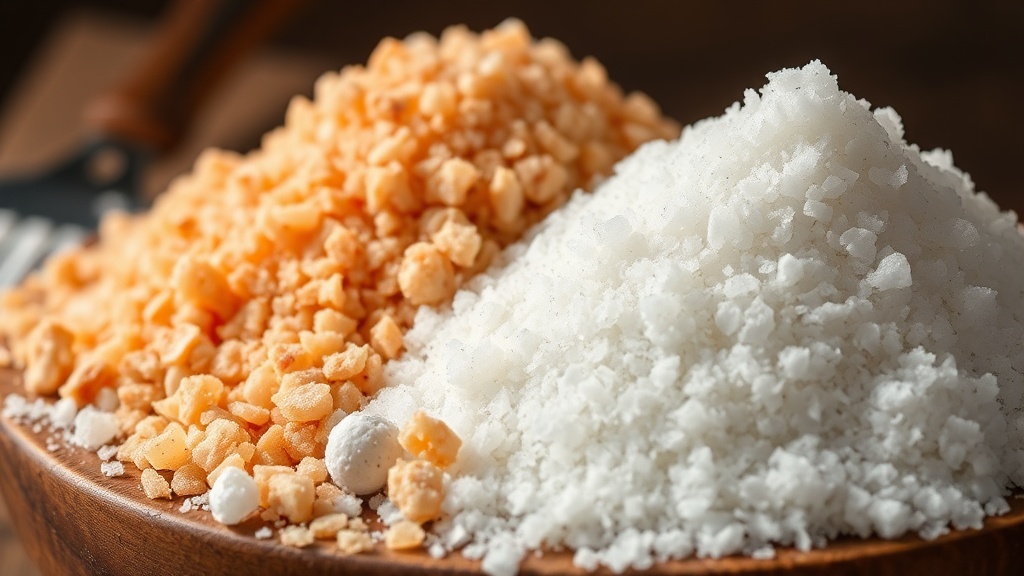
Seasoning Smarter: A Practical Guide to Salt Varieties in Your Kitchen

Does a pinch of salt really make that much difference?
It’s easy to think of salt as, well, just salt. A simple white crystal, either fine or coarse, that makes food taste less bland. But if you’ve ever wondered why your home-cooked meals sometimes lack that elusive restaurant-quality sparkle, the answer might lie in your salt shaker (or lack thereof, plural). Understanding the nuances of different salt varieties—from their mineral composition to their crystal structure and even how they’re harvested—can genuinely transform your cooking. This guide will walk you through the world of salt, helping you discern when to reach for a flaky sea salt versus a readily dissolving kosher, and how to use each to maximize flavor, texture, and visual appeal in your dishes. Let’s get into how this humble seasoning is anything but simple.
Why Does Different Salt Matter So Much for Flavor and Texture?
At its core, salt is sodium chloride, a compound our bodies need and our palates crave. But the vast array of salts available aren’t just interchangeable vessels for salinity; they’re distinct tools in a chef’s arsenal. The differences stem primarily from three factors: origin, processing, and mineral content. Where salt comes from—whether an ancient underground deposit or an evaporated ocean — impacts its mineral impurities, which in turn can impart subtle flavor notes beyond pure saltiness. Think of the slight minerality in a good sea salt compared to the sharp, clean taste of a highly refined table salt.
Processing also plays a significant role. Some salts are harvested, then meticulously washed and crushed, resulting in uniform, dense crystals. Others are carefully raked from tidal pools, leaving delicate, irregular flakes that dissolve differently on the tongue. This brings us to crystal structure and density, perhaps the most impactful difference for cooks. A fine-grained salt dissolves rapidly, distributing its saltiness evenly and quickly throughout a dish. Coarser salts, however, provide bursts of flavor as they melt, offering a more complex sensory experience. This tactile difference is why a sprinkle of flaky salt over a finished dish can feel so much more intentional and delightful than an equal amount of table salt.
Texture is also an underappreciated aspect. Imagine biting into a perfectly cooked steak. If it’s seasoned with fine salt, the saltiness is integrated. But if you finish it with a coarse, crunchy salt, you get a pleasing textural contrast, a tiny explosion of seasoning with every bite. The interaction of salt with other ingredients—how it draws out moisture, enhances sweetness, or cuts through richness—is also heavily influenced by its physical properties. To really dive into the science of how salt affects our perception of food, a resource like