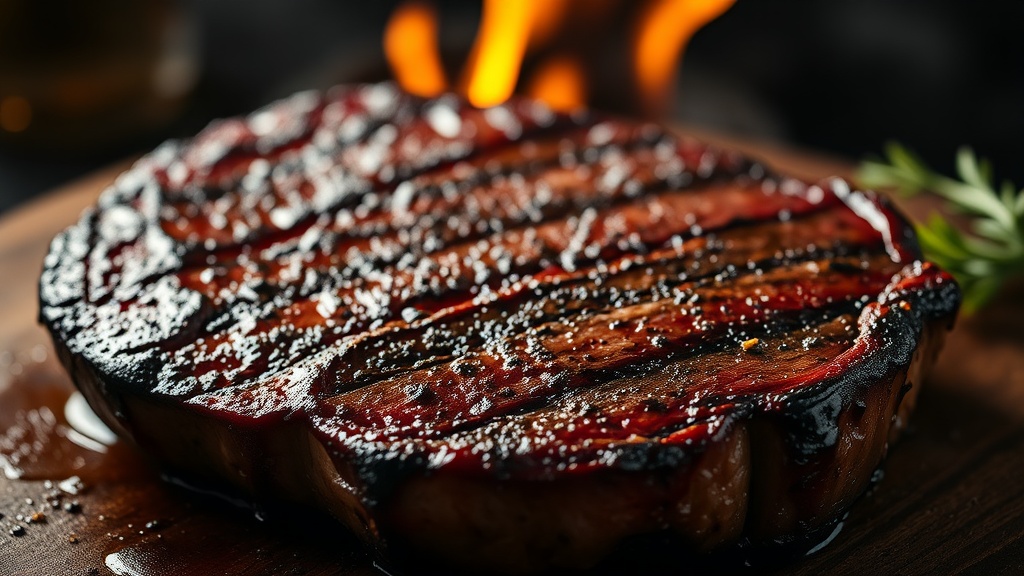
The Secret to That Dark Mahogany Crust on Your Steak

Why does the meat you cook at home often look grey and sad while the steakhouse version has that deep, mahogany crust? It isn't just about the quality of the beef or the price of the stove. This post covers the mechanics of heat transfer and the chemistry of browning—why it matters for every single savory dish you make. Understanding these basics changes how you approach a pan, whether you're searing scallops or browning beef for a stew. It is the difference between a meal that tastes like it was boiled in a damp basement and one that has the complex, roasted depth of a professional kitchen.
What actually happens when meat hits a hot pan?
Browning isn't just a color change; it is a chemical transformation called the Maillard reaction. This process involves a reaction between amino acids and reducing sugars under the influence of heat. When you hit that sweet spot—usually between 280°F and 330°F—hundreds of different flavor compounds are created. These are the molecules responsible for the savory, "meaty" aromas that define a great steak or a roasted chicken. If your pan temperature is too low, these reactions don't happen efficiently. Instead of complex, roasted notes, you end up with the simple, flat flavors of boiled protein. This is why a hot pan is non-negotiable for anyone serious about flavor. (It's also why your kitchen smells amazing when you're doing it right.)
The reaction starts when the carbonyl group of a sugar reacts with the amino group of an amino acid. This forms an N-substituted glycosylamine, which then undergoes what chemists call an Amadori rearrangement. The resulting compounds break down further into smaller, volatile molecules like pyrazines and furans. You can read more about the specific chemical stages of the Maillard reaction to understand how these chemical rearrangements lead to specific flavors. Without this process, meat is just cooked protein—edible, but lacking the depth that makes us crave it. Many people confuse this with caramelization, but that's a different process involving only sugars at much higher temperatures. In the world of savory cooking, Maillard is king.
Why does your steak turn grey instead of brown?
The most common reason for a failed sear is moisture. Water is the mortal enemy of browning. When you place a piece of meat into a hot skillet, the heat from the metal has to go somewhere. If the surface of the meat is wet, that energy is immediately used to evaporate the water. Turning liquid water into steam requires an massive amount of energy—physics calls this the latent heat of vaporization. Because steam forms at 212°F at sea level, the surface of your meat will stay stuck at that temperature until every drop of surface moisture has turned into gas. Since the Maillard reaction requires temperatures well above 280°F, your meat is essentially boiling in its own juices while you wait for the surface to dry out.
By the time the moisture is gone and browning finally starts, the heat has had plenty of time to travel into the center of the meat. This leads to the dreaded "grey band"—that thick layer of overcooked, tough fiber surrounding a small strip of pink in the middle. To prevent this, you must dry the meat as thoroughly as possible. Use paper towels and press hard. (Don't worry, you aren't squeezing out the juices; you're just cleaning the surface.) Professional chefs often leave meat uncovered in the fridge for a few hours to let the air dry out the exterior. This simple step makes a huge difference in how quickly that crust forms once the meat hits the oil. If you want a perfect result, check out this guide to pan-seared steaks for more on surface preparation.
Which oil should you use for high-heat cooking?
The oil you choose is just as important as the pan itself. Every fat has a smoke point—the temperature at which it begins to break down, smoke, and release acrid flavors. For a high-heat sear, you need an oil with a high smoke point. Extra virgin olive oil might be great for a salad dressing, but it will smoke and burn at around 375°F. For a proper sear, you're looking for temperatures closer to 450°F. Butter is even worse for this initial stage, as the milk solids will burn almost instantly, though you can use clarified butter (ghee) which has had those solids removed. Neutral oils like grapeseed, avocado, or refined peanut oil are the best choices for browning meat.
These oils can handle the heat without adding unwanted flavors or filling your kitchen with blue smoke. Avoid using non-stick sprays, as they often contain additives that can leave a gummy residue on your pans when exposed to high heat. Also, remember that you don't need a pool of oil. You only need enough to coat the bottom of the pan and ensure the heat is transferred evenly into the nooks and crannies of the meat's surface. The oil acts as a bridge between the flat pan and the irregular surface of the food. Without it, you only get browning where the meat physically touches the metal, leaving pale spots everywhere else. (This is why pressing down on the meat with a weight or your tongs can help improve the contact.)
Why thermal mass is your best friend in the kitchen
Think of a pan like a battery for heat. A heavy cast iron skillet is a big battery; it can hold a lot of energy. A thin aluminum pan is a tiny battery. When you put a cold steak into the pan, you are effectively "draining" that battery. If the battery is too small, the temperature drops below the threshold for the Maillard reaction. This is why you often see recipes tell you to "not crowd the pan." If you put too many pieces of meat in at once, the combined cooling effect is too much for the pan to handle. The temperature drops, the juices leak out, and you end up steaming your meat instead of searing it. You want a pan that retains energy—a heavy-bottomed cast iron skillet is the gold standard here—because you need to maintain that high surface temperature against the cooling effect of the ingredient.
You can test your pan's temperature without a thermometer using the water droplet test. If you flick a few drops of water onto the surface and they immediately sizzle and vanish, the pan isn't hot enough. But if the droplets form into a ball and skitter across the surface like they are on a cushion of air, you have reached the Leidenfrost point. This happens when a layer of steam forms under the droplet, insulating it from the metal. This means your pan is well above 400°F and ready for the oil. Be careful, though; the oil will smoke almost immediately at this temperature, so you need to be ready to work fast. It's a high-energy environment that requires your full attention.
The role of salt and resting in a perfect sear
Salt plays a double role in the searing process. When you salt meat well in advance—a process often called dry brining—the salt draws out moisture through osmosis. This moisture dissolves the salt, creating a concentrated brine that then gets reabsorbed into the meat. As it does this, it breaks down some of the muscle proteins, which helps the meat hold onto its juices during cooking. Most importantly for our sear, the surface of the meat dries out during this time in the fridge. By the time you are ready to cook, the exterior is seasoned and bone-dry, which is the perfect starting point for the Maillard reaction. If you don't have time to salt early, salt immediately before the meat hits the pan. Salting ten minutes before is the worst option, as the moisture will be sitting on the surface but won't have had time to reabsorb.
Finally, we need to talk about resting. Once you have that perfect crust, the temptation is to cut into the meat immediately. Resist it. While the meat cooks, the muscle fibers contract and push moisture toward the center. If you cut it right away, those juices will run all over your cutting board. By letting the meat rest for five to ten minutes, the fibers relax and reabsorb that moisture. The result is a steak that is juicy from the first bite to the last. This step ensures your hard work in the pan pays off on the plate. It is the final piece of the puzzle that turns a good piece of meat into a professional-quality meal. Don't skip it just because you're hungry.